

Alright, so imagine a world where making new stuff used to take forever, cost a ton, and was super rigid. You had an idea, but actually making it happen was a whole different story, full of waiting and spending big bucks. But then, something cool came along: 3D printing. This tech is totally changing how we invent things, how we test them out, and how we make them better. It’s like a game-changer for anyone trying to bring a product to life, whether you’re a small startup or a big company.
Key Takeaways
- 3D printing makes prototyping super fast, so you can try out ideas and fix them quickly.
- It helps save money by cutting down on expensive tools and material waste.
- You can design really wild and complex shapes that were impossible before.
- Testing products becomes much more real, using strong materials to see how they actually work.
- This tech fits right into modern, flexible development methods, making teamwork smoother.
Accelerated Prototyping And Iteration
3D printing has seriously sped things up. Forget waiting weeks for prototypes; now, you can have something tangible in a day or two. This is a game-changer, especially when you’re trying to explore ideas and refine products quickly.
Rapid Design Refinement
With 3D printing, you can tweak a design, print it overnight, and test it the next day. It’s that simple. This rapid turnaround means you can catch design flaws early and often, leading to a much better final product. It’s not just about speed; it’s about getting it right, faster. This iterative process allows for continuous improvement based on real-world feedback.
Faster Product Cycles
Traditional prototyping can drag on forever, but 3D printing cuts that time dramatically. Instead of months, you’re looking at weeks, or even days, to get a prototype ready for testing. This speed is crucial for staying competitive and getting your product to market before someone else does. It also allows for more experimentation without blowing the budget.
Reduced Time To Market
Getting your product to market faster is a huge advantage. 3D printing helps you revise, and finalise products quickly, which means you can beat the competition and start generating revenue sooner. This is especially important in industries where trends change rapidly. Imagine launching a product months ahead of schedule – that’s the power of accelerated prototyping.
3D printing isn’t just about making things faster; it’s about changing the whole product development process. It allows for more flexibility, more creativity, and ultimately, better products.
Cost Efficiency In Development
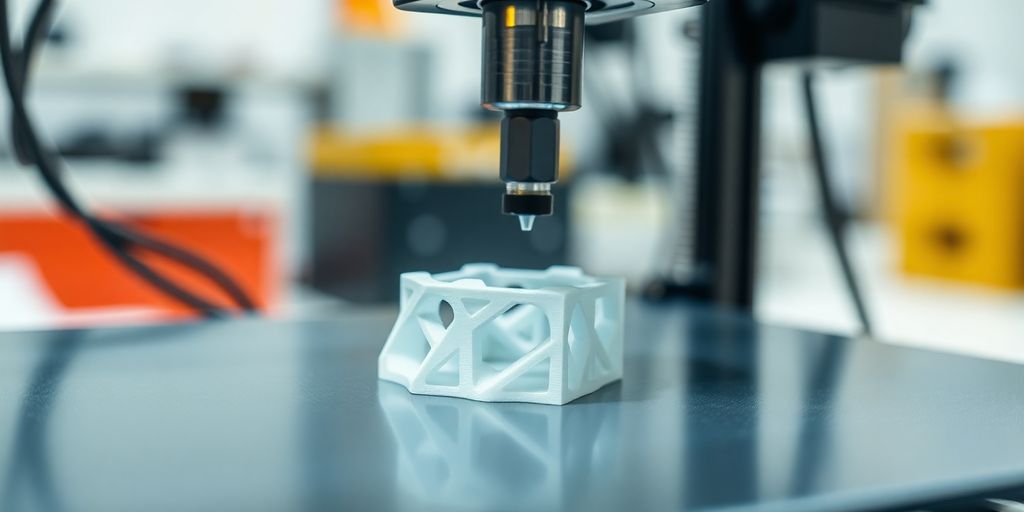
3D printing isn’t just about making cool shapes; it’s also about saving money during product development. Traditional methods can be expensive, especially when you need to make changes. With 3D printing, you can cut costs in several key areas. It’s not a magic bullet, but it can seriously impact your budget.
Eliminating Tooling Expenses
One of the biggest cost savings comes from ditching traditional tooling. Creating molds or custom tools can be a huge upfront expense, especially for early-stage products that are likely to change. 3D printing lets you produce parts directly from digital files, skipping the tooling step altogether. This is a game-changer for small businesses or anyone working with limited funds. It lowers the barrier to entry and lets more people explore new ideas without breaking the bank. Unilever, for example, saw significant cost savings by using 3D printing for prototyping.
Lower Material Costs
3D printing can also help reduce material costs. Traditional prototyping often involves subtractive methods, where you start with a large block of material and remove what you don’t need. This creates a lot of waste. 3D printing, on the other hand, only uses the material needed to create the part. Plus, you can often use less expensive materials for prototypes since they don’t need to have the same properties as the final product. It’s a more efficient way to use resources, and it can add up to significant savings over time. Here’s a quick comparison:
| Method | Material Usage | Waste |
|---|---|---|
| Traditional | High | High |
| 3D Printing | Low | Low |
Optimized Resource Allocation
Beyond tooling and materials, 3D printing can free up your team to focus on other important tasks. Instead of spending weeks building a physical prototype, engineers can use that time to refine the design, conduct more tests, or work on other projects. This improved resource allocation can lead to faster product cycles and better overall results. It’s about making the most of your team’s skills and time. 3D printing allows teams to [explore ideas and refine products] in a way that wasn’t possible before.
3D printing allows for faster creation and testing of prototypes. No special tools are needed, and materials costs are lower than old-fashioned prototypes. Changing prototyping strategies and buying machines could be costly, but companies quickly see a return on their investment both financially and in their new capabilities.
Unleashing Design Freedom
3D printing really changes the game when it comes to design. Traditional manufacturing often puts limits on what you can create, but 3D printing? Not so much. It’s like giving designers a blank canvas and saying, "Go wild!" It’s not just about making things faster; it’s about making things differently. The possibilities are pretty exciting.
Complex Geometries And Intricate Details
With 3D printing, you can create shapes and designs that would be super difficult, or even impossible, with traditional methods. Think about it: intricate lattice structures, internal channels, and crazy curves. These kinds of designs used to be a total headache, but now they’re totally doable. This opens up a whole new world for product designers. It’s not just about making things look cool; it’s about making them work better too. For example, you can design parts with optimized weight distribution or create internal cooling systems that are way more efficient. It’s a total game changer for 3D printed parts.
Functional And Aesthetic Possibilities
3D printing lets you play around with both how a product works and how it looks. You’re not stuck with standard shapes or materials. You can mix and match different materials to get the exact properties you need. Want a part that’s strong but also lightweight? No problem. Need a specific texture or finish? Easy. It’s all about having the freedom to experiment and create something that’s both functional and beautiful. It’s like having a superpower for product design. This is how you can explore ideas and refine products.
Customization And Personalization
One of the coolest things about 3D printing is how easy it makes customization. You can tailor products to fit individual needs or preferences without a ton of extra cost. Imagine getting a phone case that’s perfectly molded to your hand or a pair of shoes that are designed specifically for your feet. That’s the power of 3D printing. It’s not just about mass production anymore; it’s about mass personalization. This is especially useful in the medtech devices field, where prosthetics and implants can be made to fit each patient perfectly.
3D printing is changing the way we think about design. It’s not just about making things cheaper or faster; it’s about making things better. It’s about giving designers the freedom to explore new ideas and create products that are truly unique. It’s about putting the power of creation back in the hands of the people.
Enhanced Functional Testing
3D printing isn’t just about making things look good; it’s about making them work well too. Functional testing is where 3D printing really shines, allowing for real-world simulations and validations that were previously expensive or impossible.
Real-World Performance Validation
3D printing allows for the creation of prototypes that can be tested under realistic conditions. Forget simulations that only get you so far. We’re talking about putting parts through the wringer, seeing how they hold up to stress, temperature, and all sorts of environmental factors. This is a game-changer for industries where failure isn’t an option. Imagine testing a new automotive part in a wind tunnel, or a medical device under simulated body conditions. The possibilities are endless.
Testing With Engineering-Grade Materials
It used to be that prototypes were made from materials that didn’t accurately reflect the final product. Now, with advancements in 3D printing, we can use engineering-grade materials that mimic the properties of production materials. This means we can test prototypes that behave almost exactly like the real thing. Here’s a quick look at some common materials and their uses:
| Material | Properties | Common Applications |
|---|---|---|
| ABS | Durable, heat resistant | Automotive parts, enclosures |
| Polycarbonate | High strength, impact resistant | Safety equipment, lenses |
| Nylon | Flexible, wear resistant | Gears, hinges |
| TPU | Elastic, abrasion resistant | Seals, gaskets, flexible components |
Minimizing Production Risks
By thoroughly testing prototypes, we can identify potential design flaws or material weaknesses before committing to full-scale production. This significantly reduces the risk of costly recalls or product failures down the line. It’s like having a crystal ball that shows you potential problems before they even happen. Think of it as an insurance policy against major headaches. It also helps with regulatory compliance early in the design process.
3D printing is changing the game. It’s not just about making things faster or cheaper; it’s about making them better. By enabling enhanced functional testing, 3D printing is helping companies bring higher-quality, more reliable products to market.
Streamlined Agile Development
3D printing really shines when it comes to agile development. It’s like giving your team superpowers, allowing them to move faster and adapt to changes on the fly. Traditional methods can be slow and clunky, but 3D printing injects a dose of speed and flexibility into the whole process. It’s not just about making things; it’s about making things better, quicker.
Cross-Functional Collaboration
3D printing breaks down silos. Imagine designers, engineers, and marketers all huddled around a physical prototype, hashing out ideas in real-time. That’s the power of 3D printing. It provides a tangible focal point for discussions, ensuring everyone is on the same page. It’s way easier to point out a flaw or suggest an improvement when you can actually hold the thing in your hands. This collaborative environment leads to more innovative and well-rounded products. It’s a game-changer for team dynamics.
Continuous Feedback Loops
Forget waiting weeks for feedback. With 3D printing, you can get it almost instantly. Print a prototype, get feedback, tweak the design, and print again – all in a matter of days. This rapid iteration cycle is invaluable for identifying and fixing problems early on. It’s like having a superpower that lets you see into the future and avoid costly mistakes. This every stage of product development becomes more efficient and less risky.
Improved Decision-Making
Seeing and touching a physical prototype makes a world of difference. Instead of relying on abstract concepts or simulations, decision-makers can evaluate the product’s form, fit, and function firsthand. This leads to more informed and confident decisions, reducing the likelihood of costly errors down the line. It’s about bringing clarity and certainty to the development process. Plus, it helps to get 3D printed parts into the hands of stakeholders early, so they can provide input and buy-in.
Integration With Advanced Technologies
3D printing isn’t just a standalone tool anymore; it’s becoming deeply intertwined with other advanced technologies to really change how products are made. Think of it as part of a bigger, smarter system. It’s not just about printing; it’s about connecting everything for better results.
Synergy With CAD Software
3D printing and CAD (Computer-Aided Design) software are like peanut butter and jelly – they just go together. CAD software is used to create the digital designs that 3D printers then bring to life. But it’s going beyond just creating a design. Now, CAD software is getting smarter, with features that help optimize designs specifically for 3D printing. This means you can design things that are easier to print, use less material, and are stronger overall. It’s all about making the design and printing processes work together every stage of product development more smoothly.
Leveraging Artificial Intelligence
AI is starting to play a big role in 3D printing. AI algorithms can analyze data from past prints to predict the best settings for future jobs. This can help reduce errors, improve print quality, and even speed up the printing process. AI can also be used to optimize designs for 3D printing, suggesting changes that make them stronger, lighter, or easier to manufacture. It’s like having a smart assistant that helps you get the most out of your 3D printer. AI systems can learn from data to adapt to new situations.
Cloud-Based Process Management
Cloud-based platforms are making it easier to manage 3D printing processes from anywhere. These platforms allow you to upload designs, track print jobs, and collaborate with others on projects. This is especially useful for teams that are spread out geographically. Plus, cloud platforms often offer access to a wide range of 3D printing services, such as design optimization, material selection, and post-processing. It’s all about making 3D printing more accessible and easier to manage. These platforms can recognize potential disruptions when they are still in the early stages.
Imagine a future where you can design a product on your computer, send it to a 3D printer in another country, and have it printed and delivered to your customer without ever having to leave your desk. That’s the power of integrating 3D printing with cloud-based process management.
Real-World Applications And Impact
Medical Device Innovation
3D printing is seriously changing the game in medical device creation. Imagine being able to create custom prosthetics or surgical tools tailored to a specific patient’s needs. That’s the power of 3D printing. It’s not just about making things faster; it’s about making them better and more personalized. For example, medtech devices can now be designed and manufactured with incredible precision, leading to improved patient outcomes and reduced recovery times.
Automotive And Aerospace Advancements
In the automotive and aerospace industries, 3D printing is helping to push the boundaries of what’s possible. Think lighter, stronger parts for cars and planes, made with complex geometries that were previously impossible to manufacture. This leads to improved fuel efficiency, enhanced performance, and increased safety. It’s a win-win for everyone. Plus, every stage of product development can be accelerated, from initial design to final production.
Consumer Electronics Evolution
Consumer electronics are also getting a major boost from 3D printing. Companies are using it to create more innovative and personalized products, from custom phone cases to unique headphone designs. This allows for faster iteration and testing of new ideas, leading to more exciting and cutting-edge gadgets. The ability to quickly prototype and refine designs means that explore ideas and refine products can happen at an unprecedented pace.
3D printing is not just a fad; it’s a fundamental shift in how products are developed and manufactured. Its impact is being felt across various industries, and its potential for future innovation is truly limitless.
The Future is Now
So, what’s the big takeaway here? Basically, 3D printing isn’t just some cool tech gadget anymore; it’s really changing how we make stuff. It lets companies try out new ideas super fast, saves them money, and opens up all sorts of design possibilities that were impossible before. If a business wants to keep up and stay competitive, getting on board with 3D printing isn’t just a good idea
it’s pretty much a must-do.
Frequently Asked Questions
How does 3D printing change how products are made?
3D printing helps make new products faster and cheaper. It lets designers try out ideas quickly, change them easily, and test them in real life. This means products get to customers sooner and cost less to create.
Does 3D printing save money in making new products?
Yes, it saves money! 3D printing cuts down on the need for expensive tools and molds. It also uses less material and helps teams work smarter, which all leads to lower costs during the design process.
What kind of designs can you make with 3D printing?
It gives designers a lot more freedom. They can create very detailed and complex shapes that were impossible before. This means products can look better and work in new ways, opening up lots of possibilities.
Can 3D printed parts be used for testing?
You can test products in real-world situations with 3D printed parts made from strong materials. This helps make sure the product works well before it’s mass-produced, which lowers the chances of problems later on.
How does 3D printing help teams work better?
It makes product development more flexible. Teams can work together better, get feedback quickly, and make decisions faster. This helps improve products all the time, rather than just at the end.
How does 3D printing connect with other new technologies?
3D printing works great with computer design programs and even smart computer systems (AI). This helps make designs perfect and manages the whole process from start to finish, often using online tools.