



As the year 2025 approaches, the world of innovation is buzzing with activity. Researchers and creators are working on many new ideas, aiming to change how we live and work. This article looks at 100 invention invention concepts that could become important in the coming year. These ideas cover a wide range of fields, from smart systems to new ways of creating energy. They show a future where technology helps us solve big problems and makes everyday life better.
Key Takeaways
- The year 2025 is expected to bring many new inventions across different areas.
- Artificial intelligence and sustainability are big focus points for future inventions.
- New ideas in healthcare, like AI-powered systems, could change how we get medical care.
- Advancements in mobility and connectivity will likely make our lives more linked and efficient.
- Looking ahead, concepts like fusion energy and self-healing materials show a future with big scientific breakthroughs.
1. Artificial intelligence
AI is making waves, and it’s only going to get bigger. It’s not just about robots taking over the world (though that’s a fun thought). We’re talking about AI changing how we live, work, and interact with everything around us. Think about it – from personalized medicine to self-driving cars, AI is already creeping into every corner of our lives. Let’s look at some potential areas where AI could really shine by 2025.
- AI-powered personalization: Imagine AI that knows you better than you know yourself, curating everything from your news feed to your shopping list. It’s a bit scary, but also incredibly convenient.
- AI in education: Forget boring textbooks. AI could create personalized learning experiences tailored to each student’s needs and learning style. No more one-size-fits-all education!
- AI-driven creativity: AI can already generate art and music. By 2025, we might see AI collaborating with human artists to create entirely new forms of expression. Imagine the possibilities!
One of the most interesting developments is in AI image-generation. You can type in a prompt, and the AI will create original images based on your description. It’s like having a personal artist on demand. But it’s not perfect. Sometimes the results are a bit wonky, especially with complex prompts. Still, it’s amazing to see how far the technology has come. We’re also seeing AI being used to create chatbots like ChatGPT, which can write poems, explain complex topics, and even hold conversations. It’s pretty impressive, even if its jokes still need some work. The potential for AI to transform industries is huge, but it also raises some important questions about job security and the future of work. Some CEOs are even warning about AI-induced job loss, which is something we need to take seriously. But with the right approach, we can harness the power of AI to create a better future for everyone. It’s all about finding the right balance and making sure that AI is used for good.
2. Sustainability
Sustainability is no longer a buzzword; it’s a necessity. As we move closer to 2025, expect to see even more innovation focused on preserving our planet. I was just reading about some of the advancements, and it’s pretty wild what people are coming up with. It’s not just about recycling anymore; it’s about completely rethinking how we live and consume.
Eco-Friendly Funerals
Okay, this might sound a bit morbid, but hear me out. Traditional funerals are surprisingly bad for the environment. All the embalming fluids, the fancy caskets… it adds up. But now, there’s a growing trend toward green funerals. Think biodegradable caskets, natural burials, or even turning ashes into trees. It’s a way to give back to the earth, even after you’re gone. My aunt was talking about this the other day, and honestly, it makes a lot of sense.
Direct Air Capture
Direct Air Capture (DAC) technology is gaining traction as a potential game-changer in the fight against climate change. It’s basically like giant vacuum cleaners for the atmosphere, sucking up carbon dioxide. The captured CO2 can then be stored underground or used to create synthetic fuels. It’s still pretty energy-intensive, but if they can figure out how to make it more efficient, it could be huge. I saw a documentary about carbon capture last week, and it was mind-blowing.
Sustainable Materials
We’re talking about everything from mushroom packaging to lab-grown leather. The idea is to replace traditional materials with ones that are renewable, biodegradable, or made from waste products. Imagine a world where your clothes are made from recycled ocean plastic, or your furniture is built from fast-growing bamboo. It’s not just about being eco-friendly; it’s about creating a circular economy where nothing goes to waste. I’m hoping to see more sustainable materials in everyday products soon.
3. Wellbeing
Wellbeing is set to become a major focus in the coming years. It’s not just about physical health anymore; it’s about mental and emotional wellness too. People are looking for ways to reduce stress, improve their mood, and generally feel better. I’ve been trying to meditate more, but honestly, it’s tough to quiet my brain sometimes. Maybe some of these inventions will help!
- Smart stress monitors could provide real-time feedback and personalized interventions. Imagine a device that knows when you’re getting stressed and suggests a quick breathing exercise or a calming playlist. That would be amazing for those days when everything feels overwhelming.
- Mood-boosting lighting systems that adjust throughout the day to mimic natural sunlight. I know I feel so much better on sunny days, so bringing that inside could really make a difference.
- Personalized aromatherapy diffusers that release scents based on your emotional state. Lavender for relaxation, citrus for energy – the possibilities are endless. I’d probably just end up smelling like a spa all the time, which wouldn’t be so bad.
It’s interesting to think about how technology can play a role in improving our overall wellbeing. It’s not just about gadgets; it’s about creating tools that support a healthier and happier life. And with the rise of AI-powered diagnostics, we might even see more proactive approaches to mental health care.
4. Mobility
Mobility is changing fast, and 2025 is shaping up to be a pivotal year. We’re seeing shifts in how people and goods move around, driven by technology and a growing focus on sustainability. It’s not just about cars anymore; it’s about creating systems that are efficient, accessible, and environmentally friendly. The future of mobility is about integrating different modes of transport to create a seamless experience.
Here are some areas to watch:
- Micromobility Solutions: Think beyond just scooters. We’re talking about a whole range of small, electric vehicles designed for short trips. Imagine lightweight, foldable e-bikes that you can easily take on the train, or personalized electric scooters with advanced safety features. These options could really change how we navigate cities.
- Autonomous Delivery Systems: Drones and self-driving robots are already making deliveries in some areas, but expect to see this become much more widespread. Grocery delivery? Medicine? Even your new pair of shoes? It could all be brought to your door by a robot. The big question is how these systems will integrate into existing infrastructure and address safety concerns.
- Smart Traffic Management: Traffic jams are a huge problem, costing time and money. Smart traffic management systems use data and AI to optimize traffic flow, reduce congestion, and improve safety. This could involve real-time adjustments to traffic light timings, dynamic lane management, and even personalized route guidance based on current conditions. It’s all about making the most of existing roads and infrastructure.
5. Connectivity
Connectivity is about more than just having internet access; it’s about how seamlessly we can transmit, receive, and process information. Think about it – the more connected we are, the faster ideas spread and the easier it is to collaborate. It’s wild to think about how hyperconnectivity will shape the future.
Hyperconnectivity will be a major factor in defining the measure of a high-impact invention.
I was just reading about some cool stuff in this area:
- Microsatellites: Companies are launching shoebox-sized satellites to bring internet to remote areas. Imagine helium balloons beaming internet to inaccessible places! It’s like something out of a sci-fi movie.
- Quantum Internet: The world’s first fully functional quantum internet is live! It uses entangled photons for data transmission, making it virtually unhackable. Banking and defense industries are going to be all over this quantum internet.
- Brain Stimulation: Direct brain stimulation could allow us to transmit data directly to the brain. The ethical concerns around it are something we gotta watch.
It’s not just about having more gadgets; it’s about creating a world where information flows freely and everyone has access. The interconnected nature of global economies, technologies and industries will only increase. This will help spread ideas faster, improve collaboration and integrate new advancements seamlessly. Hyperconnectivity enables organizations to tap into global talent pools, access a broader range of resources and respond quickly to technical and market changes. The continued convergence of technologies will create new products, services and industries. These will address complex global challenges like climate change and healthcare costs. As interdisciplinary research and collaboration become ever more essential, organizations that prioritize convergence will thrive.
6. Automation
Automation is really taking off, and it’s not just about robots on assembly lines anymore. We’re seeing automation creep into all sorts of industries, changing how things get done. It’s kind of wild to think about how much more efficient things could become, but also a little unsettling when you consider the potential impact on jobs. Still, the possibilities are pretty fascinating.
Smart Homes Evolving
Remember when smart homes were just about turning on lights with your phone? Now, it’s a whole different ballgame. We’re talking about systems that learn your routines and adjust everything automatically. Imagine a house that anticipates your needs, from adjusting the thermostat to starting your coffee. It’s like having a personal assistant built into your walls. The cleaning robot is now a standard feature, not a luxury.
- Automated lighting adjusts to natural light levels.
- Smart thermostats learn your heating/cooling preferences.
- Security systems that proactively monitor for threats.
Automated Agriculture
Farming is getting a high-tech makeover. Drones are surveying fields, sensors are monitoring soil conditions, and robots are planting and harvesting crops. This isn’t just about making farming easier; it’s about making it more sustainable and efficient. Automated agriculture can help reduce waste, optimize resource use, and increase yields. It’s a game-changer for feeding a growing population.
- Precision planting and harvesting.
- Automated irrigation systems.
- Real-time crop monitoring with drones.
Self-Driving Vehicles Expanding
Self-driving cars have been "just around the corner" for years, but they’re finally starting to become a reality. While we’re not all going to be riding around in fully autonomous vehicles tomorrow, the technology is rapidly improving. From self-driving trucks to delivery drones, automation is transforming transportation. It’s going to be interesting to see how this reshapes our cities and our lives.
- Autonomous trucking for long-haul transport.
- Delivery drones for last-mile logistics.
- Self-driving buses and shuttles for public transit.
7. Brain-computer interfaces
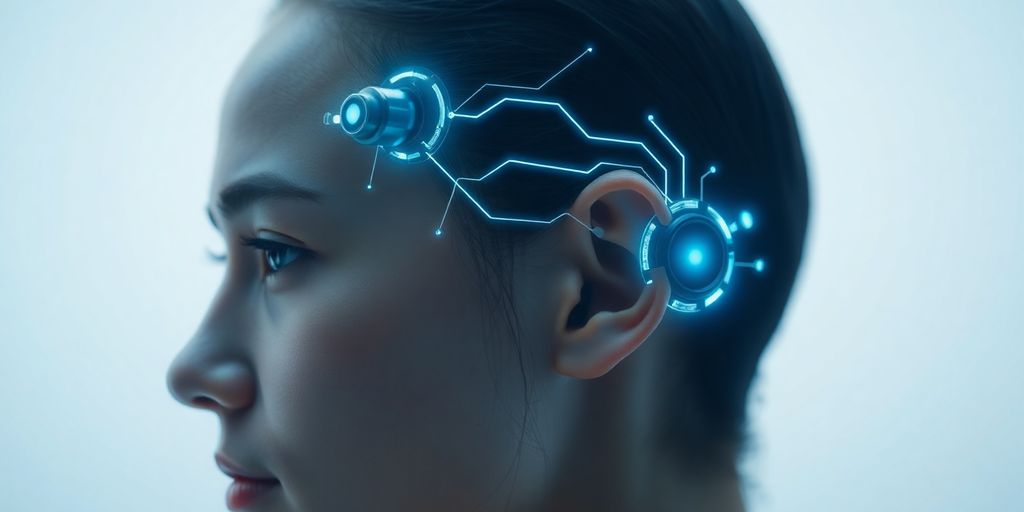
Brain-computer interfaces (BCIs) are becoming less science fiction and more reality. Scientists are making strides in connecting our brains directly to computers, opening up possibilities we only dreamed of a few years ago. It’s not just about controlling robotic arms with our minds anymore; the potential applications are expanding rapidly.
The core idea is to translate brain activity into actions or commands that a computer can understand. This could revolutionize how we interact with technology and treat neurological conditions.
Think about it:
- Restoring communication for people with paralysis: Imagine someone who can’t speak or move being able to type messages or control a computer cursor just by thinking about it. Scientists are working on BCIs for communication that could make this a reality.
- Treating neurological disorders: BCIs could be used to stimulate specific areas of the brain to alleviate symptoms of conditions like Parkinson’s disease or epilepsy.
- Enhancing human capabilities: While still in its early stages, there’s potential for BCIs to enhance cognitive functions like memory or attention. Imagine being able to learn new skills or access information instantly.
Of course, there are challenges to overcome. Developing safe and effective BCIs requires a deep understanding of the brain and advanced technology. But the progress being made is exciting, and it’s likely that we’ll see even more breakthroughs in this field in the coming years. It’s a wild time to be alive, watching this technology unfold. It’s like something out of a movie, but it’s actually happening!
8. Fusion energy
Okay, so fusion energy. It’s been "just around the corner" for like, 50 years, right? But seriously, things are starting to look promising. All that research and development might actually be paying off. The idea of clean, nearly limitless energy is becoming less of a pipe dream and more of a tangible goal.
Think about it:
- No more worrying about fossil fuels running out.
- Way less pollution, which is a huge win for the planet.
- Countries could become way more independent when it comes to energy.
I read somewhere that they even powered a whole city in France with fusion. Tokamak City, I think it was called. Cut their energy costs by a crazy amount. Imagine what that could do for everyone!
It’s still early days, and there are definitely challenges to overcome. But the progress is undeniable. Maybe my kids will grow up in a world powered by fusion. That would be pretty awesome.
9. Self-healing materials
Imagine a world where scratches on your phone magically disappear, or cracks in buildings repair themselves. That’s the promise of self-healing materials. It sounds like science fiction, but it’s rapidly becoming reality. Scientists are exploring different approaches, from embedding tiny capsules of repair agents within materials to using biological components that can regenerate damaged areas. It’s pretty cool stuff.
One of the most interesting developments is in self-healing concrete. Think about the implications for infrastructure! Less maintenance, longer lifespans for bridges and buildings, and reduced costs. Researchers at MIT and Cambridge have already developed self-healing concrete that uses bacteria to secrete limestone, automatically repairing cracks. It’s like giving concrete a biological immune system.
Here are some potential applications of self-healing materials:
- Consumer electronics: Imagine phones and laptops that can shrug off scratches and minor damage.
- Aerospace: Self-healing composites could significantly improve the safety and lifespan of aircraft.
- Automotive: Cars with self-repairing paint and body panels would be a game-changer.
- Construction: Self-healing concrete and other building materials could revolutionize infrastructure.
The key to self-healing materials lies in their ability to detect and respond to damage autonomously. This often involves incorporating some kind of trigger mechanism, such as the presence of water or a change in pH, that activates the healing process. It’s a complex field, but the potential benefits are enormous. I read about some engineers who combined mycelium with bacteria cells to create a new building material. It’s amazing what they come up with!
10. AI-powered healthcare
AI is changing healthcare, and it’s happening fast. By 2025, expect AI to be even more involved in how we get medical care. It’s not just about robots doing surgery; it’s about making healthcare more accessible, accurate, and personalized.
AI’s ability to analyze huge amounts of data is revolutionizing diagnostics and treatment.
Here’s what to expect:
- Predictive analytics: Imagine AI spotting potential health problems before they even show symptoms. By analyzing your genetic data, lifestyle, and wearable data, AI could predict your risk for diseases like cancer or heart disease. This means doctors can take action early, potentially saving lives.
- AI-enhanced diagnostics: AI is getting really good at reading medical images like X-rays and MRIs. It can spot tiny details that a human doctor might miss, leading to earlier and more accurate diagnoses. Think about AI spotting tumors at Stage 0 with almost perfect accuracy. That’s a game-changer.
- Virtual health assistants: Forget waiting on hold to talk to a nurse. AI-powered virtual assistants can answer your medical questions, schedule appointments, and even monitor your health remotely. This is especially helpful for people in rural areas who don’t have easy access to doctors. AI therapists can even provide instant cognitive behavioral therapy. It’s like having a doctor in your pocket, 24/7.
11. And more
Beyond the headliners, a multitude of other innovations are bubbling up, promising to reshape our world in unexpected ways. It’s easy to get caught up in the hype around AI and fusion, but sometimes the most impactful changes come from less obvious corners. These emerging technologies could very well define the next decade.
Consider these areas:
- Advanced Robotics in Agriculture: Imagine fields tended by robots that can identify and address individual plant needs. This could revolutionize farming, making it more efficient and sustainable. We might see a rise in agricultural automation to combat labor shortages.
- Personalized Education Platforms: AI-driven platforms that adapt to each student’s learning style and pace. No more one-size-fits-all education; instead, a tailored learning experience that maximizes individual potential. This could lead to a more engaged and effective future of learning.
- Smart Infrastructure: Cities that are not only connected but also responsive to the needs of their citizens. From self-repairing roads to energy-efficient buildings, smart infrastructure could make urban living more sustainable and enjoyable. Think about sensors embedded in roads that detect potholes and automatically dispatch repair crews. It’s all about creating a smarter city.
- Bioprinting of Organs: While still in its early stages, the potential of bioprinting to create functional human organs is immense. This could eliminate the need for organ donors and save countless lives. The ethical considerations are significant, but the potential benefits are undeniable. This could revolutionize future technology.
These are just a few examples, and the possibilities are truly endless. The future is being built right now, one invention at a time.


