


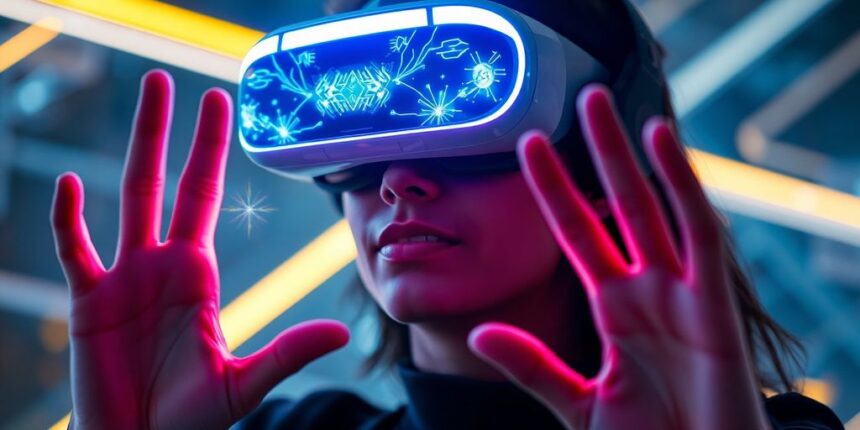
Virtual reality, or VR, isn’t just for games and movies anymore. It’s actually changing how businesses connect with their customers in big ways. Think about it: instead of just looking at pictures or reading descriptions, people can now step into a virtual world and really experience products or services. This new way of doing things is making customer interactions much more interesting and personal. It’s all about making people feel more involved, which can lead to them being happier and sticking around longer with a brand.
Key Takeaways
- VR helps companies tell their stories in a new, interactive way, making customers feel more involved.
- Shopping is getting a VR makeover, with virtual fitting rooms and showrooms that let you try things from home.
- Product demos are way better with VR; you can check out items in detail and make smarter choices before buying.
- Customer service can use VR for things like virtual guides and training, which means better help for you.
- VR makes experiences open to more people, no matter where they are or what their physical abilities are.
Transforming Customer Engagement Through Immersive Experiences
VR is changing how companies connect with their customers. It’s not just about cool tech; it’s about making real, lasting connections. Think about it: instead of just seeing an ad, you’re in the ad. That’s the power of VR. It’s about creating experiences, not just selling products.
Creating Interactive Brand Narratives
VR lets brands tell their stories in a way that’s never been possible before. Customers aren’t just watching; they’re participating. Imagine stepping into a virtual world created by your favorite brand, exploring its history, and interacting with its products in a fun, engaging way. It’s like stepping into a movie, but you’re the star. This immersive marketing experiences can really change how people see a brand.
Fostering Deeper Emotional Connections
VR can create emotional connections with customers. It’s more than just seeing a product; it’s about feeling something. For example:
- A travel company could let you virtually experience a destination before you book a trip.
- A charity could show you the impact of your donation in a real, tangible way.
- A car company could let you test drive a car on a virtual racetrack.
VR can create empathy and understanding in a way that traditional media can’t. It’s about putting people in someone else’s shoes and letting them experience the world from a different perspective.
Building Lasting Customer Relationships
VR experiences can lead to stronger customer relationships. When customers feel connected to a brand, they’re more likely to be loyal. Think about it this way:
- Personalized experiences: VR allows brands to tailor experiences to individual customers.
- Interactive storytelling: Customers become part of the brand’s story, creating a sense of ownership.
- Memorable moments: VR creates experiences that customers will remember and share with others.
VR is not just a gimmick; it’s a way to build real, lasting relationships with customers. It’s about creating experiences that matter and making customers feel valued.
Revolutionizing Retail With Virtual Shopping
Virtual reality is changing how we shop. It’s not just about games anymore; it’s about making shopping easier and more engaging. Imagine trying on clothes without actually being in a store, or exploring a showroom from your couch. That’s the power of VR in retail. It’s about bringing the store to you.
Virtual Fitting Rooms and Showrooms
Forget crowded dressing rooms and limited selections. Virtual fitting rooms let you see how clothes look on you from every angle, without the hassle. Showrooms let you explore furniture or cars in a realistic setting, all from your home. Companies are using augmented reality to let customers test products virtually, offering convenience without sacrificing the tactile experience. It’s like having a personal stylist and showroom at your fingertips.
Enhancing Product Exploration and Customization
VR allows you to get up close and personal with products in ways you never could before. You can zoom in on details, rotate items, and even customize them to your liking. Want to see that couch in a different color? No problem. Need to check out the stitching on those shoes? Easy. This level of interaction gives you a better understanding of the product before you buy.
Boosting Consumer Confidence and Reducing Returns
One of the biggest benefits of VR shopping is increased confidence. By trying before you buy, you’re less likely to be disappointed with your purchase. This leads to fewer returns, which saves you time and money, and it’s better for the environment too. Plus, happy customers are more likely to become repeat customers. It’s a win-win for everyone.
VR in retail isn’t just a gimmick; it’s a real solution to many of the challenges facing the industry. It enhances the shopping experience, reduces returns, and builds stronger customer relationships. As the technology continues to improve, we can expect to see even more innovative applications of VR in the retail space.
Here’s a quick look at how VR can impact return rates:
| Feature | Impact on Returns |
|---|---|
| Virtual Try-On | Reduces by 25% |
| 3D Product Visualization | Reduces by 20% |
| Interactive Demos | Reduces by 15% |
VR is not just a trend; it’s the future of retail. It’s changing the way we shop, and it’s only going to get better from here.
Elevating Product Demonstrations and Sales
VR is changing how products are shown and sold. It’s not just about seeing a picture anymore; it’s about experiencing the product. This shift can really grab a customer’s attention and make them more likely to buy.
Interactive Product Previews
Imagine being able to try out a car before even going to the dealership. VR lets you do that. You can sit inside, check out the features, and even take it for a virtual spin. This kind of immersive experience gives potential buyers a much better feel for the product than any brochure could.
Virtual Tours for Informed Decisions
Buying a house? VR tours let you walk through different properties without leaving your couch. You can see the layout, check out the finishes, and get a real sense of the space. This is especially helpful for people who are moving from out of town or who have busy schedules.
Showcasing Features and Configurations Remotely
VR makes it easy to show off all the cool things a product can do. Instead of just listing features, you can let customers experience them firsthand. This is great for complex products with lots of options. For example, you can configure a product and see how the different options look in real time.
VR demos are not just a gimmick. They offer a way to connect with customers on a deeper level, providing them with the information they need to make confident purchase decisions. This can lead to increased sales and happier customers.
Here’s a simple example of how VR can improve sales:
- Increased engagement: Customers spend more time interacting with the product.
- Better understanding: Customers grasp the features and benefits more easily.
- Higher confidence: Customers feel more sure about their purchase decision.
Enhancing Customer Service and Support
VR is changing how companies handle customer interactions. It’s not just about answering questions anymore; it’s about creating experiences that leave customers feeling heard and valued. I think it’s a pretty big deal, honestly.
Immersive Onboarding Experiences
Imagine setting up a new product, but instead of reading a boring manual, you’re in a virtual world where someone guides you step-by-step. That’s the power of immersive onboarding. It makes learning fun and easy.
- Interactive tutorials replace static manuals.
- Users learn by doing in a safe, virtual environment.
- Reduces the learning curve and increases product adoption.
Virtual Troubleshooting Guides
Stuck with a technical issue? Instead of endless phone calls, VR can provide virtual guides that walk you through the solution. It’s like having a technician right there with you. This is especially useful for complex products or services. I think AR and VR can really help here.
Simulating Real-World Interactions for Training
VR can simulate real-world customer service scenarios, allowing employees to practice handling difficult situations in a safe environment. It’s like a flight simulator, but for customer service. This is a game-changer for training. Call centers can use VR to train agents, allowing them to experience challenging scenarios firsthand. This prepares them to handle complex customer inquiries with confidence and empathy. It’s a great way to improve customer support.
VR training allows employees to make mistakes and learn from them without real-world consequences. This leads to more confident and capable customer service representatives.
Expanding Accessibility and Inclusivity
VR isn’t just about cool tech; it’s also about making things accessible to more people. Think about it: not everyone can easily travel to a store, attend an event, or even physically interact with products. VR can bridge those gaps, offering experiences that were once out of reach. It’s a game-changer for inclusivity.
Removing Geographical and Physical Barriers
VR can break down barriers, allowing people to experience things regardless of their location or physical abilities. Imagine someone who can’t travel easily being able to explore a museum or attend a concert from their living room. Or someone with mobility issues being able to "walk" through a virtual store. It opens up a whole new world of possibilities. It’s not just about convenience; it’s about providing access to experiences that might otherwise be impossible. For example, virtual reality event marketing can be more inclusive.
Enabling Virtual Exploration for All
VR can be customized to meet different needs. This means adjusting the pace of an experience, providing audio descriptions, or offering alternative input methods. It’s about creating an environment where everyone can participate comfortably and confidently. Think about educational settings, where students with different learning styles can benefit from interactive, immersive experiences. Or consider product demos, where customers can explore features at their own pace, without feeling rushed or pressured.
Demonstrating Brand Commitment to Diverse Audiences
Brands that embrace VR for accessibility and inclusivity are sending a powerful message. They’re showing that they value all customers, regardless of their background or abilities. This can lead to increased brand loyalty and positive word-of-mouth. It’s not just about doing the right thing; it’s also about making good business sense. By catering to a wider audience, brands can expand their reach and build stronger relationships with their customers.
VR is not just a technological advancement; it’s a tool for social good. By prioritizing accessibility and inclusivity, we can create a more equitable and connected world. It’s about using technology to empower people and break down barriers, not reinforce them.
Here’s a simple example of how VR can improve accessibility:
- Virtual tours of historical sites for people with mobility issues.
- Interactive language learning programs for people with learning disabilities.
- Remote collaboration tools for people in geographically isolated areas.
Driving Innovative Marketing Campaigns
VR is changing how companies market their products. It’s not just about ads anymore; it’s about creating experiences. Think about it: instead of just seeing a commercial, you could walk through a virtual store or try out a product in a simulated environment. That’s the power of VR in marketing.
Crafting Engaging Virtual Advertisements
Virtual ads are way more than just videos. They’re interactive experiences that pull you in. Imagine an ad where you can actually explore a new car’s interior or try on clothes without leaving your couch. That’s the kind of engagement VR ads can create. It’s about making ads that people actually want to spend time with. These AR marketing campaigns are really changing the game.
Creating Immersive Showrooms and Events
Forget crowded stores and boring trade shows. VR lets you create showrooms and events that anyone can access from anywhere. You can walk through a virtual car dealership, explore a new home design, or attend a product launch without the hassle of travel. It’s a great way to reach a wider audience and give them a memorable experience.
Influencing Purchase Decisions Through Interactivity
VR gives potential customers a chance to really interact with products before they buy. They can see how furniture looks in their home, try on clothes, or even test drive a car. This level of interactivity builds confidence and makes people more likely to make a purchase. It’s about giving them the information and experience they need to feel good about their decision.
VR marketing isn’t just a trend; it’s a fundamental shift in how brands connect with consumers. By creating immersive and interactive experiences, companies can build stronger relationships and drive sales in ways that were never before possible.
Advancing Training and Development
VR is changing how we train people, making it more engaging and effective. Instead of just reading manuals or watching videos, people can now step into realistic simulations that mimic real-world situations. This hands-on approach can lead to better skills and understanding, and it can also save companies money in the long run.
Simulating Real-World Scenarios
VR lets trainees practice in environments that feel just like the real thing, but without the risks. Whether it’s practicing emergency protocols or mastering the use of industrial equipment, VR simulations reduce the likelihood of accidents and foster safer workplaces. Imagine a surgeon practicing a complex operation in VR before ever picking up a scalpel in a real operating room. Or a firefighter learning how to navigate a burning building without actually being in danger. This kind of immersive training can make a huge difference in how prepared people are when they face real-world challenges. LearnBrite’s platform allows for the design of fully interactive learning environments, enabling users to participate in realistic simulations and collaborative training sessions that enhance engagement and understanding.
Improving Skills and Efficiency
VR training isn’t just about safety; it’s also about improving skills and making people more efficient. By providing immediate feedback and allowing trainees to repeat tasks until they master them, VR can accelerate the learning process. Plus, VR can track performance and identify areas where trainees need extra help. This personalized approach can lead to better outcomes and a more skilled workforce.
Cost-Effective Learning Solutions
While the initial investment in VR equipment may seem high, it can actually save companies money in the long run. VR training can reduce the need for expensive on-site training, travel costs, and equipment downtime. It can also minimize the risk of accidents and errors, which can be costly. Over time, the benefits of VR training can far outweigh the costs.
VR offers a way to standardize training across different locations and departments. This ensures that everyone receives the same high-quality instruction, regardless of their location or background. This consistency can lead to better performance and a more unified workforce.
Here’s a simple comparison of traditional vs. VR training costs:
| Training Method | Cost per Trainee | Time to Proficiency | Risk of Error |
|---|---|---|---|
| Traditional | $500 | 2 weeks | High |
| VR | $300 | 1 week | Low |
As you can see, VR can be a more affordable and effective way to train people. Incorporating VR into curricula requires a shift in teaching methodologies, which comes with a learning curve for educators. Effective implementation hinges on comprehensive training programs that empower teachers to use VR platforms confidently and creatively.
Conclusion
So, what’s the big takeaway here? VR isn’t just some cool tech gadget anymore. It’s really changing how businesses connect with people. Think about it: customers can try out products, explore places, and even learn new things, all without leaving their couch. This kind of interaction makes people feel more connected to a brand. As this technology keeps getting better, the companies that jump on board will be way ahead. They’ll be able to give customers experiences that are just plain better, and that’s a win for everyone.
Frequently Asked Questions
How does VR help businesses connect better with customers?
VR lets companies make special stories where customers can join in, not just watch. This makes people feel more connected and helps build strong, lasting relationships with the brand.
How is VR changing the way we shop?
In stores, VR allows people to try on clothes virtually or look at products in a digital showroom from their own homes. This makes shopping easier and more fun.
Can VR help customers decide what to buy?
VR helps businesses show off their products by letting customers look at them up close in a virtual space. This helps people make better choices before they buy something.
How does VR improve customer support?
Yes, VR can make customer service better by offering virtual guides and practice situations. This helps people learn faster and get better help.
Does VR make things more open to everyone?
VR makes it possible for more people to experience things, no matter where they are or if they have physical challenges. It helps brands include everyone.
How does VR change marketing and advertising?
VR helps companies create cool ads and virtual events that get people excited about their products. It makes shopping more interactive and can help people decide to buy.